
Names and Connections and Sometimes Photos
Cover Image: Detail of the masthead of Ka Nupepa Kuokoa published on March 29, 1923.

Aloha Nūhou Monday!
Dear Reader, these days there is a lot of genealogical information online—some can only be accessed for a fee, while a few sources are available at no cost. The Hawaiian language newspapers can be freely searched online, and are filled with all kinds of information (with genealogies being just one of them). However, the variety of names and aliases that people were known by can pose a challenge for family looking for information on kūpuna, and even for experienced researchers.
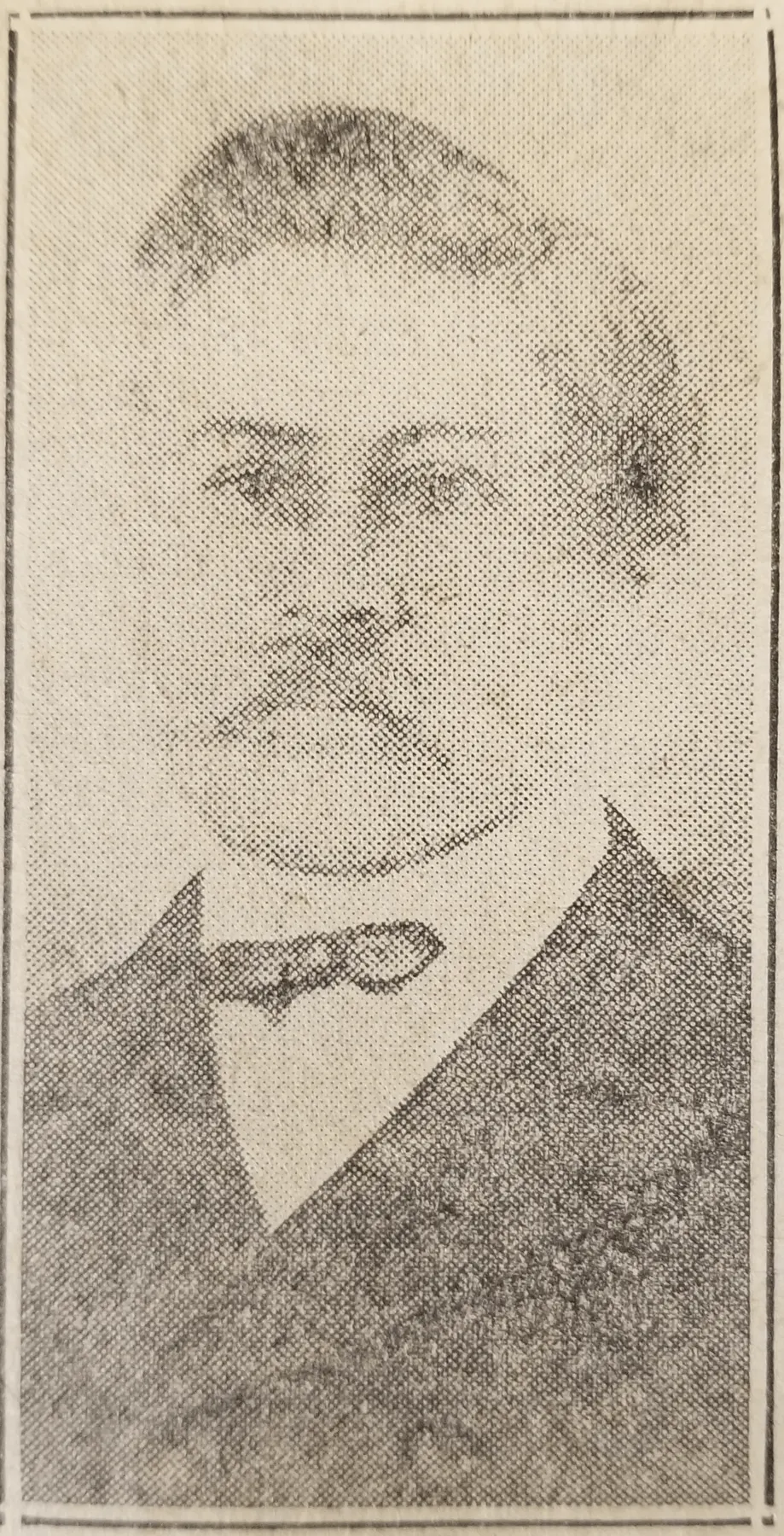
Zachariah Kapule, a clarinet player in the Royal Hawaiian Band for 36 years, was variously known as Zakalia, Zakaria, and it seems Zerubabela as well. Death announcements are a good place to find genealogical information. After 1900, there is sometimes even a photograph attached to the announcement! Here is a death announcement for Zachariah Kapule [Zakaria Kapule] along with a photograph found in Ka Nupepa Kuokoa on March, 29, 1923. It was submitted by his wife, Kane Hanawahine Kapule.
Kapule’s obituary published in the Honolulu Star-Bulletin on March 24, 1923 gives his name as Zerubabela Kapule. He is also referred to as Zerubabela [Zerubbabel] on a number of occassions. The many ways in which people were referred to in Hawaiʻi past is complicated and often confusing. Look for more posts on the subject in the future.
Before I end this post, there is a related online resource found on OHA’s Papakilo Database that I wanted to touch on: the Sullivan Collection in Bishop Museum Library & Archives. The collection consists of photos taken of Hawaiians across the archipelago by anthropologist Louis R. Sullivan between 1920 and 1921. Within it I found two images of Zachariah Kapule (listed this time as Zacariah Kapule). There is an exhibit running now until October 24, 2021 at Bishop Museum speaking about the complex history of these images, and how they have been given a new and positive life today. For more information on (Re)Generations: Challenging Scientific Racism in Hawaiʻi, see: bishopmuseum.org/regenerations/
—Post by Bishop Museum Library & Archives Staff
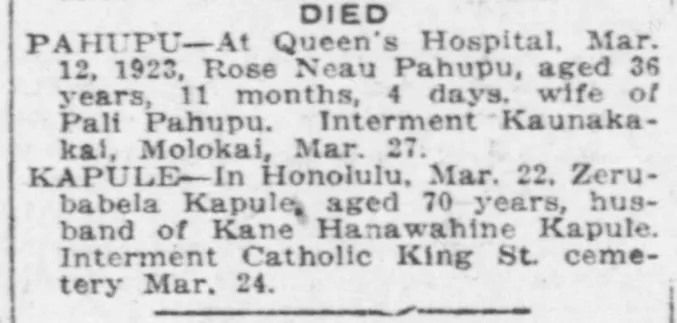
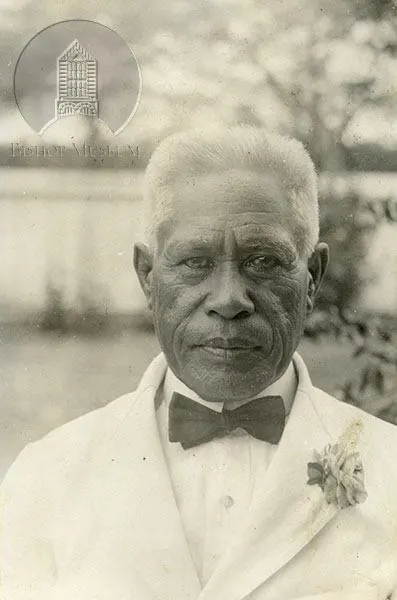
Image: Zachariah Kapule, clarinet player for the Royal Hawaiian Band; Oʻahu. Photo by Louis R. Sullivan, 1920–1921. Bishop Museum Archives. SP 6424.
Image sharing on social media is welcome, however out of respect for those pictured and their living descendants we do ask that you share not only their images but their names and stories as well. For all other uses please contact Archives@BishopMuseum.org
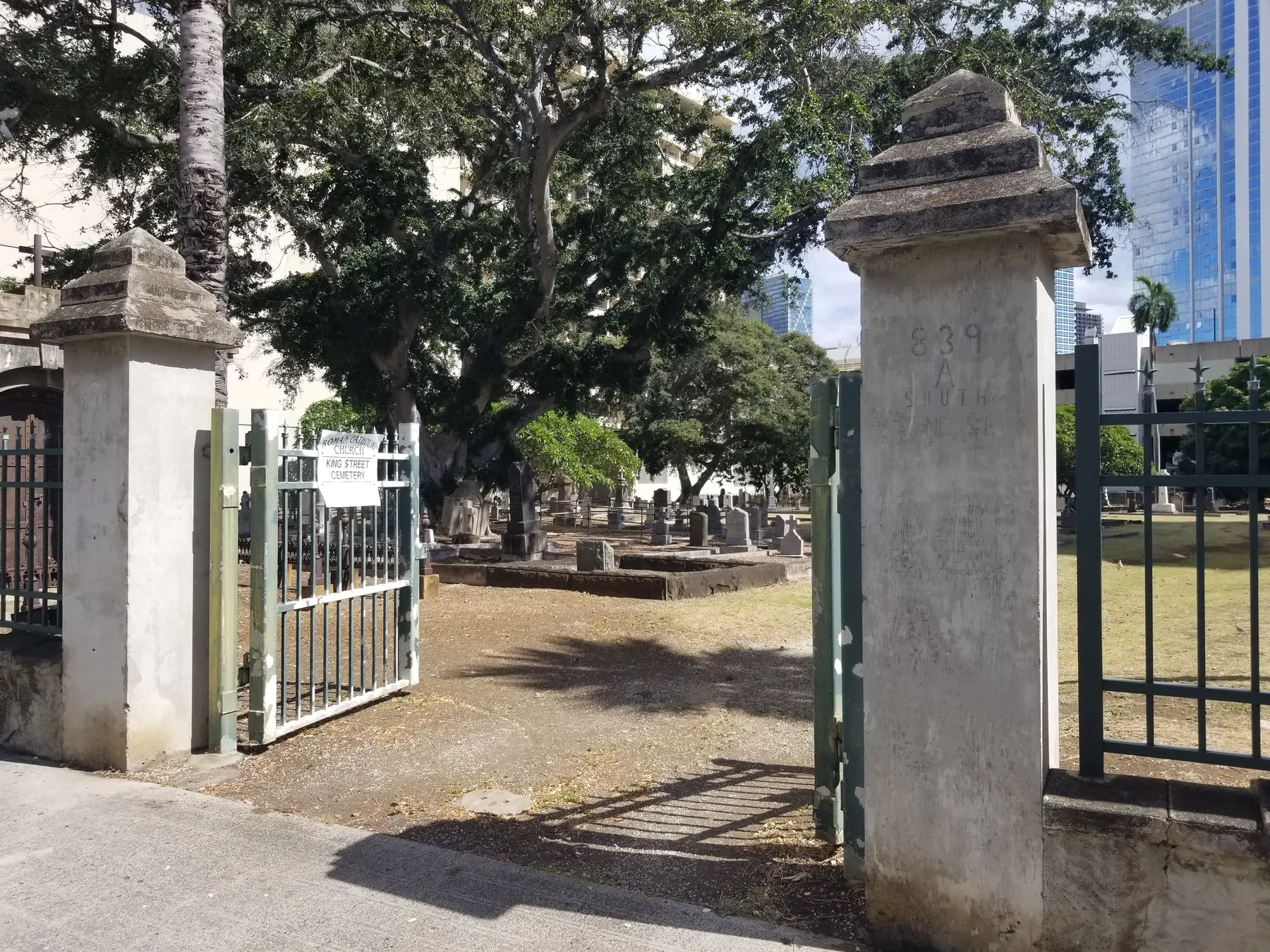
Image: Kōʻula Cemetery, more commonly known as the King Street Cemetery, the last resting place of Zachariah Kapule. Honolulu, Hawaiʻi, 2021.
More from Ka Nupepa Kuokoa
See all →
A Place to Share One’s Grief
Hawaiian language newspapers had a readership that stretched across the archipelago from Hawaiʻi Island of Keawe to Niʻihau that snatched away the sun. People were subscribing to the newspapers even father away. Placing an announcement in the paper was the most efficient way to inform family and friends of the death of a loved one.

Descriptions of Travels, Near and Far
From the first Hawaiian language newspaper, Ka Lama Hawaii, until the very last, Ka Hoku o Hawaii, there were published countless accounts of travels around these islands as well as to foreign lands across the sea.

Digitizing Preparations Now Underway
The much awaited set up and calibration of our new Digital Transitions Titan machine is complete and we received initial training early September!

Jonah Kūhiō Kalanianaʻole, Hawaiian Homes, and the mele “Kalamaʻula”
This is the 100th anniversary of the passing of the Hawaiian Homes Commission Act, championed by Jonah Kūhiō Kalanianaʻole.