
Binding: An Early Means of Preserving Newspapers
Cover Image: Masthead of Ka Hae Hawaii published on October 1, 1856.
Aloha Nūhou Monday!
Dear Reader, one reason we can still read about Cakobau’s letter to Lunalilo, or the response of the New Zealand government to the overthrow is because much of the newspapers were bound.
The hardcover binding would keep the issues in order and provide protection to the delicate newsprint. The book format allowed you to access them just as you did other volumes on your bookshelf. Early newspapers like Ke Kumu Hawaii would even provide their readers with an index at the end of the year.
The following is one of many articles encouraging the reader to have their newspapers bound.
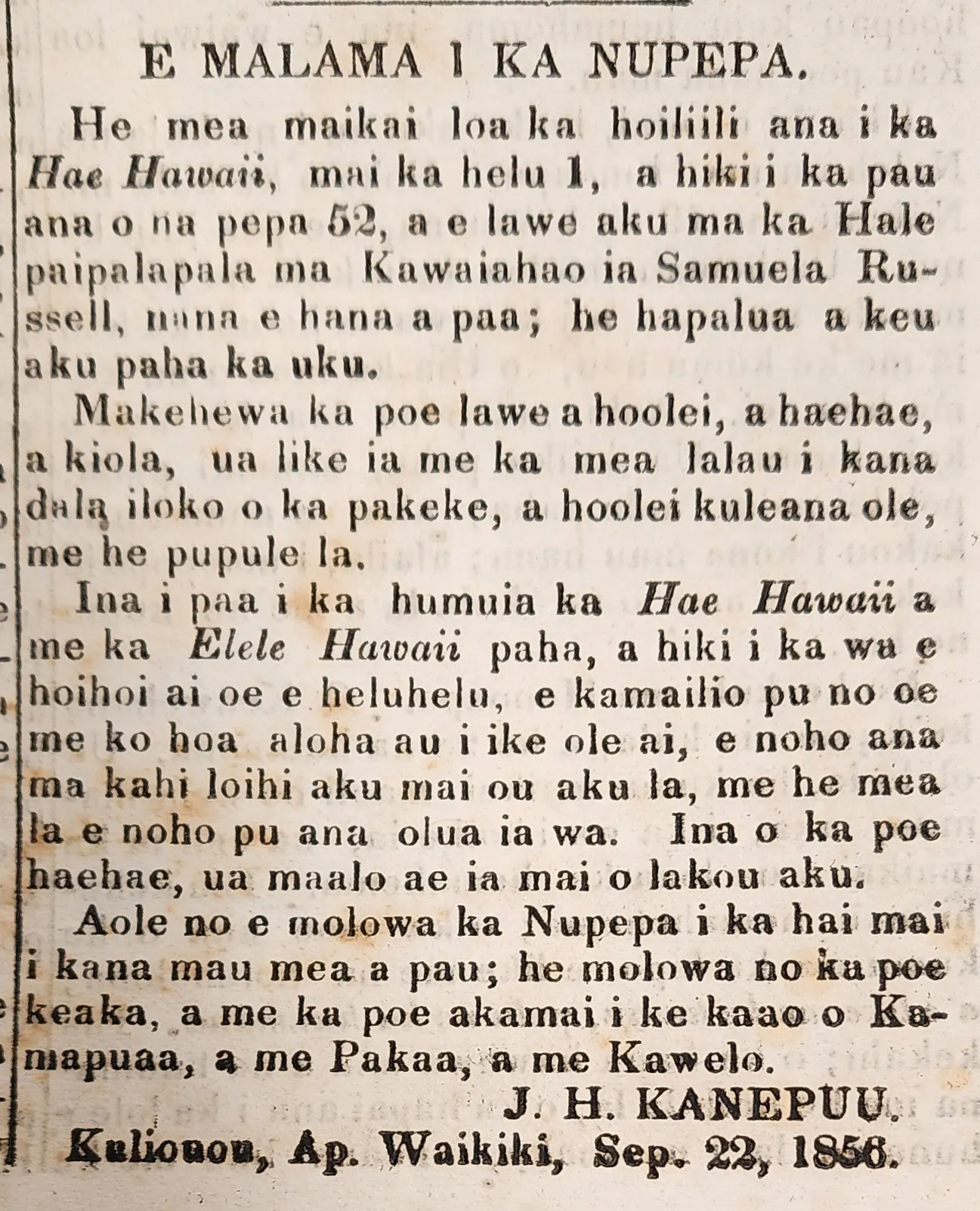
Image: “E Malama I ka Nupepa,” Ka Hae Hawaii, October 1, 1856, p. 122
TAKE CARE OF YOUR NEWSPAPERS.
It is wise to gather up your Hae Hawaii, from issue 1 until the end of the 52 issues, and to take them to the printing house at Kawaiahaʻo to Samuel Russell for him to bind; the price is half a dollar or so.
Those who take and toss them aside, or tear them up and throw them away are wasteful, just like the person who grabs a dollar from inside his pocket and discards it without cause, like a crazy man.
If your Hae Hawaii is bound, or Elele Hawaii perhaps, and there comes a time when you are interested in reading it, you can talk with your friend1 living far away from you who you do not know, as if you are living together at that moment. For those who tear up the newspaper, they would be left behind.
The newspapers never grow weary speaking of all it holds; actors will become lazy, and so too those knowledgeable in the tales of Kamapuaʻa, Pākaʻa, and Kawelo.
J. H. Kānepuʻu
Kuliʻouʻou, ʻĀp. Waikīkī, Sep. 22, 1856.
1“Friend” was frequently used in the Hawaiian language newspapers directly addressing the reader, most often in the form “hoaloha heluhelu,” “hoa heluhelu,” or “makamaka heluhelu,” with the idea of “reading friend” or “dear reader.”
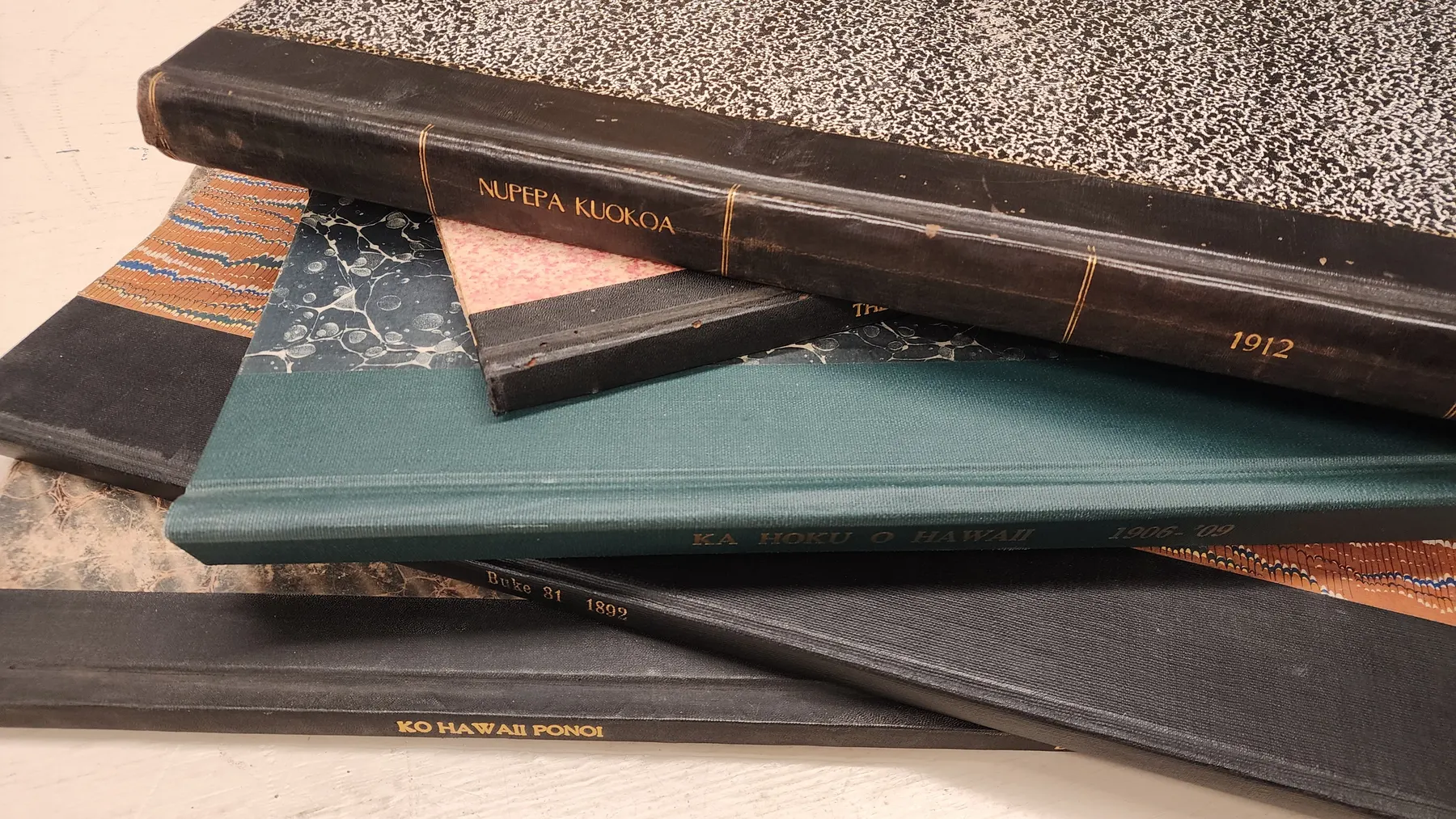
Image: A selection of bound newspapers featuring covers of different colors and designs.
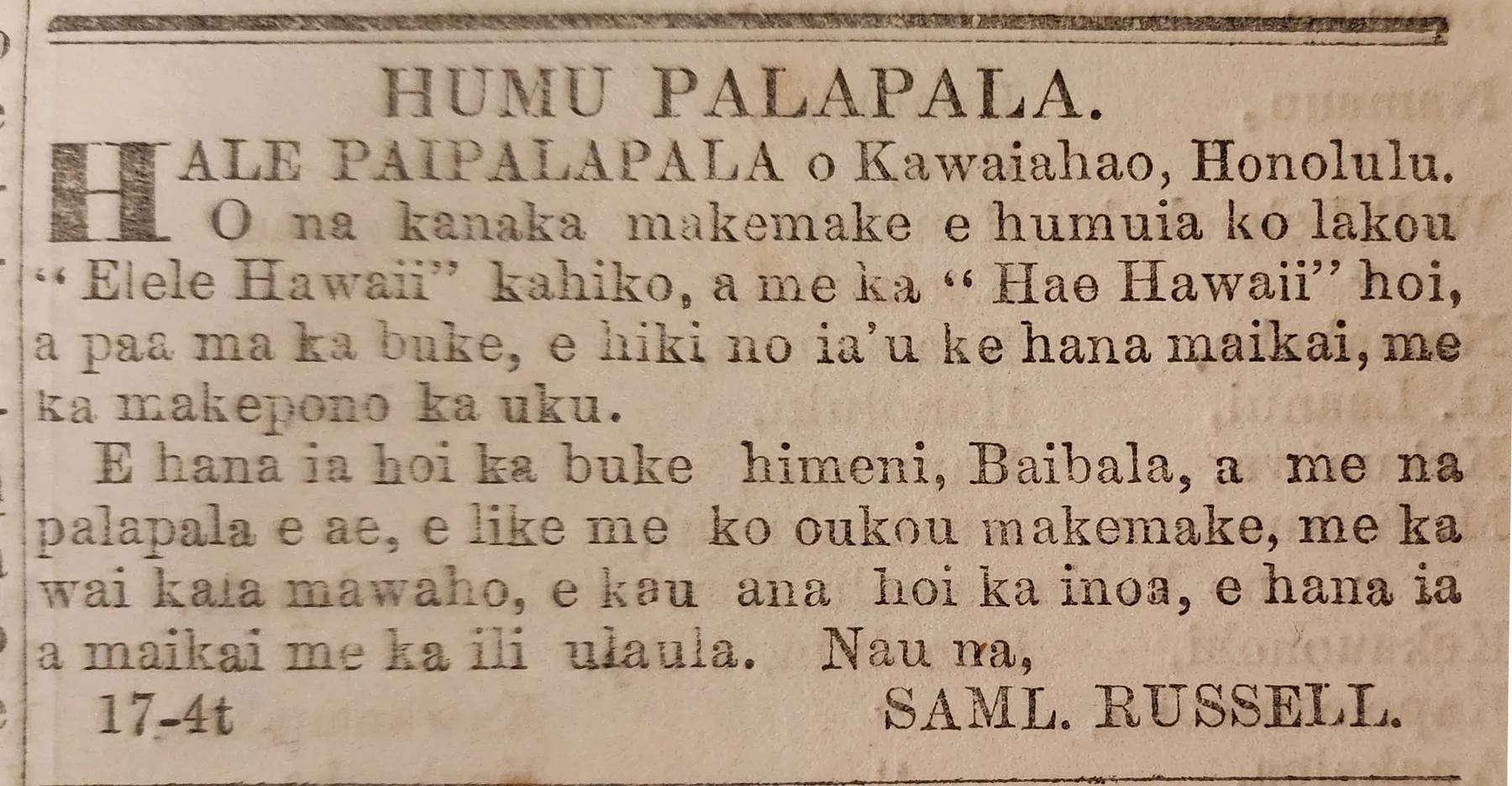
Image: “Humu Palapala,” Ka Hae Hawaii, June 25, 1856, p. 67
BINDERY.
PRINTING HOUSE of Kawaiahaʻo, Honolulu. For those who want their old Elele Hawaii and Hae Hawaii sewn and bound into a book, I am able to perform this nicely, for a reasonable charge.
Also bound are hymnals, Bibles, and other documents, as you desire. With the title on the outside in silver and done nicely in red leather.
Yours,
SAMUEL RUSSEL.
This post is part of He Aupuni Palapala: Preserving and Digitizing the Hawaiian Language Newspapers, a partnership between Bishop Museum and Awaiaulu with assistance from Kamehameha Schools. Mahalo nui loa to Hawaii Tourism Authority for their support. Learn more about this project here.
More from Ka Hae Hawaii
See all →
Recipes in the Newspapers
Last week we mentioned a recipe for poi palaoa sent all the way from California in 1859 to the newspaper Ka Hae Hawaii . While today it is easy to find online a wide variety of recipes for most any dish you can think of, it was not so easy in the 1800s and 1900s.
Joining the Military with Friends, 1918
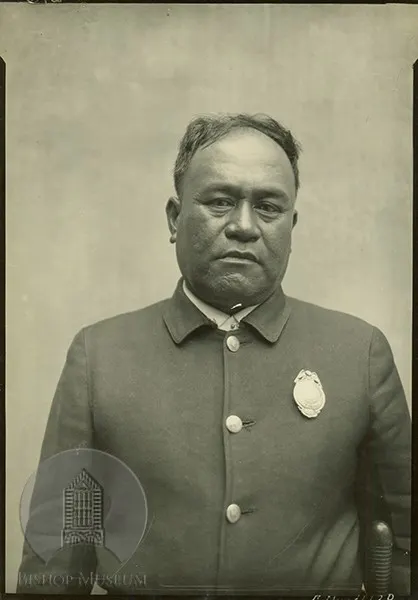
During World War I, many Hawaiians enlisted in the United States Armed Forces.
Hawaiian Kingdom Era Titles of Royalty
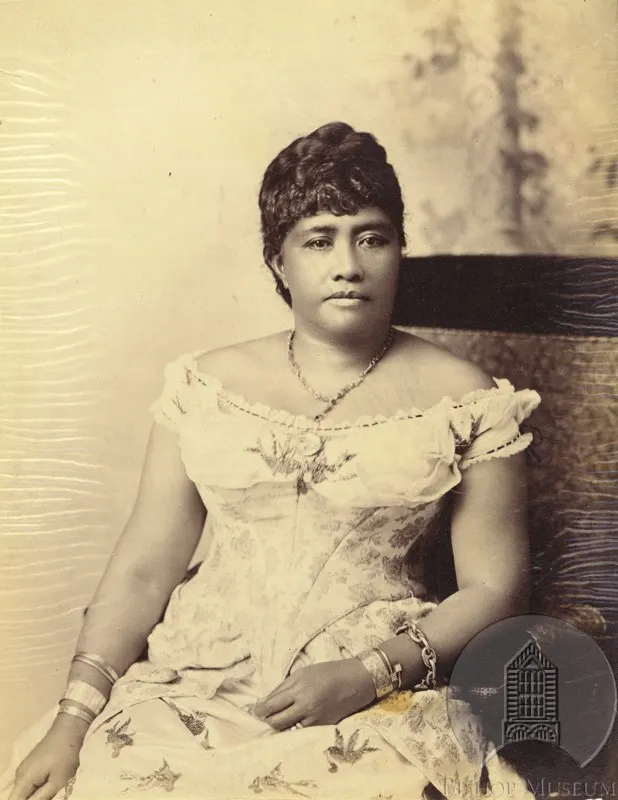
With the adoption of a European form of government, the Hawaiian people also took to incorporating titles of royalty and peerage reflecting European titles, alongside traditionally Hawaiian ones.
Advertisement Codes
Is it only me, or has anyone else looked at ads and announcements and puzzled over the numbers at the bottom?